

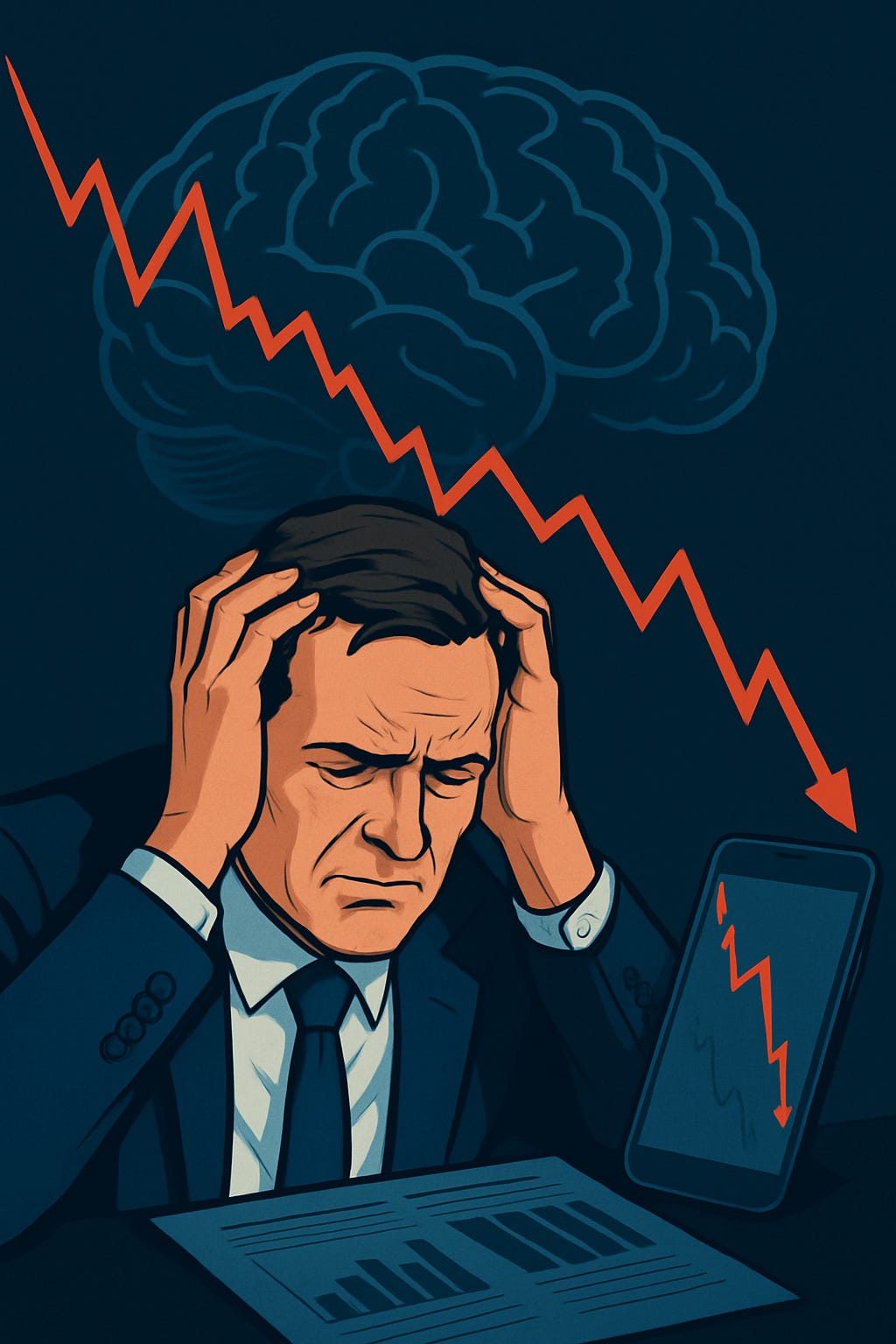
Picture this: It's March 2020. The market has just crashed 30% in three weeks. Your portfolio, which took years to build, is hemorrhaging money daily. Your spouse is asking worried questions over dinner. The financial news is a constant stream of doom. Every fiber of your being screams "SELL EVERYTHING NOW!"
What do you do?
If you're like most investors, you sell. You lock in those losses, telling yourself you'll "get back in when things stabilize." But here's the brutal truth: by the time you feel comfortable investing again, the market has already recovered most of its losses. You've just executed the classic "buy high, sell low" strategy that destroys wealth.
This isn't a story about market timing or picking the right stocks. This is about the silent killer of investment returns: your own emotions.
The Emotional Investor's Dilemma
Wall Street has a saying: "The market is a voting machine in the short run, but a weighing machine in the long run." What they don't tell you is that your emotions are constantly trying to rig the vote.
Our brains evolved to keep us alive on the African savanna, not to navigate modern financial markets. The same fight-or-flight responses that helped our ancestors survive saber-toothed tigers now sabotage our retirement accounts. When markets crash, our ancient brain doesn't see numbers on a screen—it sees existential threat.
The result? We make investment decisions based on fear, greed, and social pressure rather than logic and long-term thinking. We buy lottery tickets when we should be buying bonds, and we sell stocks when we should be buying more.
The Psychology Behind Bad Investment Decisions
Loss Aversion: Why Losses Feel Twice as Bad
Behavioral economists have discovered that losing $1,000 feels roughly twice as bad as gaining $1,000 feels good. This isn't just a quirk of human nature—it's a fundamental feature of how our brains process risk.
In investing terms, this means we're naturally inclined to do anything to avoid losses, even when those losses are temporary and part of a long-term wealth-building strategy. We'll hold onto losing stocks too long (hoping they'll recover) and sell winning stocks too early (to "lock in" gains).
The Availability Heuristic: When Recent News Feels Like Forever
Your brain gives disproportionate weight to recent, vivid information. If the last three months have been brutal for your portfolio, it feels like the market will never recover. If the last year has been fantastic, it feels like the good times will roll forever.
This is why investors tend to pile into hot sectors at market tops and flee safe assets at market bottoms. The dot-com bubble, the housing crash, the crypto boom—all driven by the same psychological pattern.
Social Proof: Following the Herd Off the Cliff
Humans are social creatures. We look to others for cues about how to behave, especially in uncertain situations. In investing, this creates dangerous feedback loops.
When your brother-in-law is bragging about his cryptocurrency gains, you feel foolish for not participating. When your coworkers are panicking about their 401(k)s, their fear becomes contagious. Before you know it, you're making investment decisions based on the emotional temperature of your social circle rather than your own financial goals.
The Real Cost of Emotional Investing
The numbers are sobering. According to research by Dalbar, the average investor significantly underperforms the market over time. While the S&P 500 returned about 10% annually over the past 30 years, the average equity investor earned only about 6.5%.
That 3.5% difference might not sound like much, but compound it over decades and you're looking at hundreds of thousands of dollars in lost wealth. The primary culprit? Poor timing decisions driven by emotional reactions to market volatility.
Consider two investors, both starting with $100,000:
Steady Eddie invests in an S&P 500 index fund and never touches it, earning the full 10% annual return
Emotional Emma tries to time the market, missing just the 10 best days each decade due to being out of the market during recoveries
After 30 years, Eddie has $1.74 million. Emma has $1.04 million. The same starting amount, the same underlying investments, but Emma's emotional decisions cost her $700,000.
Building Your Emotional Defense System
The good news? Once you understand these psychological traps, you can build systems to avoid them. Here's how the most successful long-term investors protect themselves from their own emotions:
1. Automate Everything You Can
The best investment decision is the one you don't have to make. Set up automatic transfers from your checking account to your investment accounts. Use target-date funds that automatically rebalance. Make investing as boring and systematic as possible.
When your investments are on autopilot, you can't panic-sell during market downturns because you're not actively making buy/sell decisions. You're just a passenger on a long-term wealth-building journey.
2. Write Your Investment Rules in Advance
Before you invest a single dollar, write down your investment strategy and the rules you'll follow. Include specifics:
What percentage of your portfolio will be in stocks vs. bonds?
How often will you rebalance?
Under what circumstances will you deviate from your plan? (Hint: market volatility shouldn't be one of them)
What's your timeline for needing this money?
Post these rules somewhere visible. When emotions run high, refer back to them. Your calm, rational self from six months ago is much smarter than your panicked self in the middle of a market crash.
3. Zoom Out on Your Timeline
Daily market movements feel significant when you're watching them, but they're noise when viewed from a long-term perspective. If you're investing for retirement 30 years from now, what happens to your portfolio this month is essentially irrelevant.
Create a simple rule: check your investment accounts no more than once per quarter. Daily checking leads to daily emotional reactions, which lead to poor decisions. Quarterly checking gives you enough information to stay informed without getting caught up in short-term volatility.
4. Reframe Market Crashes as Sales
When the market drops 20%, your emotional brain sees danger. But your rational brain should see opportunity. Market crashes are like your favorite store having a massive sale—everything you wanted to buy is now cheaper.
If you're regularly investing (through automatic contributions), market downturns mean you're buying more shares for the same dollar amount. This is dollar-cost averaging in action, and it's one of the most powerful wealth-building tools available to regular investors.
5. Focus on What You Can Control
You can't control market returns, but you can control your savings rate, your investment costs, and your asset allocation. You can't control when the next recession will hit, but you can control whether you have an emergency fund to avoid touching your investments during tough times.
Emotional investing happens when we focus on things outside our control. Rational investing happens when we focus on our own behavior and decisions.
The Compound Effect of Emotional Discipline
Here's the beautiful irony: the most boring investment strategy is often the most profitable. Buy a diversified portfolio of low-cost index funds, contribute regularly, and ignore the noise. It's not exciting, but it works.
The investors who get rich slowly are the ones who master their emotions. They don't try to time the market or chase hot stocks. They don't panic during crashes or get euphoric during booms. They just keep investing, month after month, year after year, letting compound returns do the heavy lifting.
Your emotions will always be part of investing—the trick is not letting them drive the bus. Build systems, follow rules, and remember that the most important investment decision you'll ever make is the decision to keep investing, regardless of how you feel about it.
The market will always be volatile. Your emotions will always try to sabotage your long-term success. But with the right mindset and systems in place, you can turn your brain from your worst investment enemy into your greatest wealth-building ally.
Remember: the goal isn't to eliminate emotions from investing—it's to make sure they don't eliminate your returns.