

When planning for financial independence and early retirement (FIRE), most calculations focus on average returns—that steady 7-10% the market has historically delivered. But hidden within these averages lurks a potential retirement killer: sequence of return risk. This is especially dangerous for early retirees who face decades of withdrawals and market fluctuations.
Today, I'll examine how a sequence of bad market years early in retirement can derail even the most carefully calculated FIRE plan, and share strategies to protect your financial independence journey.
Understanding Sequence of Return Risk
Sequence of return risk refers to the order in which your investment returns occur. Two retirement portfolios with identical average returns can have drastically different outcomes based solely on when those good and bad years happen.
The math is counterintuitive but crucial: negative returns hurt more when your portfolio is larger and especially when you're making withdrawals. A market crash early in retirement, when your nest egg is at its peak, can create irreparable damage that even years of subsequent good returns can't overcome.
The Monte Carlo Reality Check
Let's explore this using Monte Carlo simulations, which model thousands of potential retirement scenarios with randomly generated market returns. I've created simulations using these baseline assumptions:
$1,000,000 initial portfolio
10% average annual return
7% standard deviation
30-year retirement horizon
4% annual withdrawal rate
Simulation 1: The Impact of Early Bad Years
For the first simulation, I compared a baseline scenario with no specific bad years against scenarios with different sequences of bad returns.
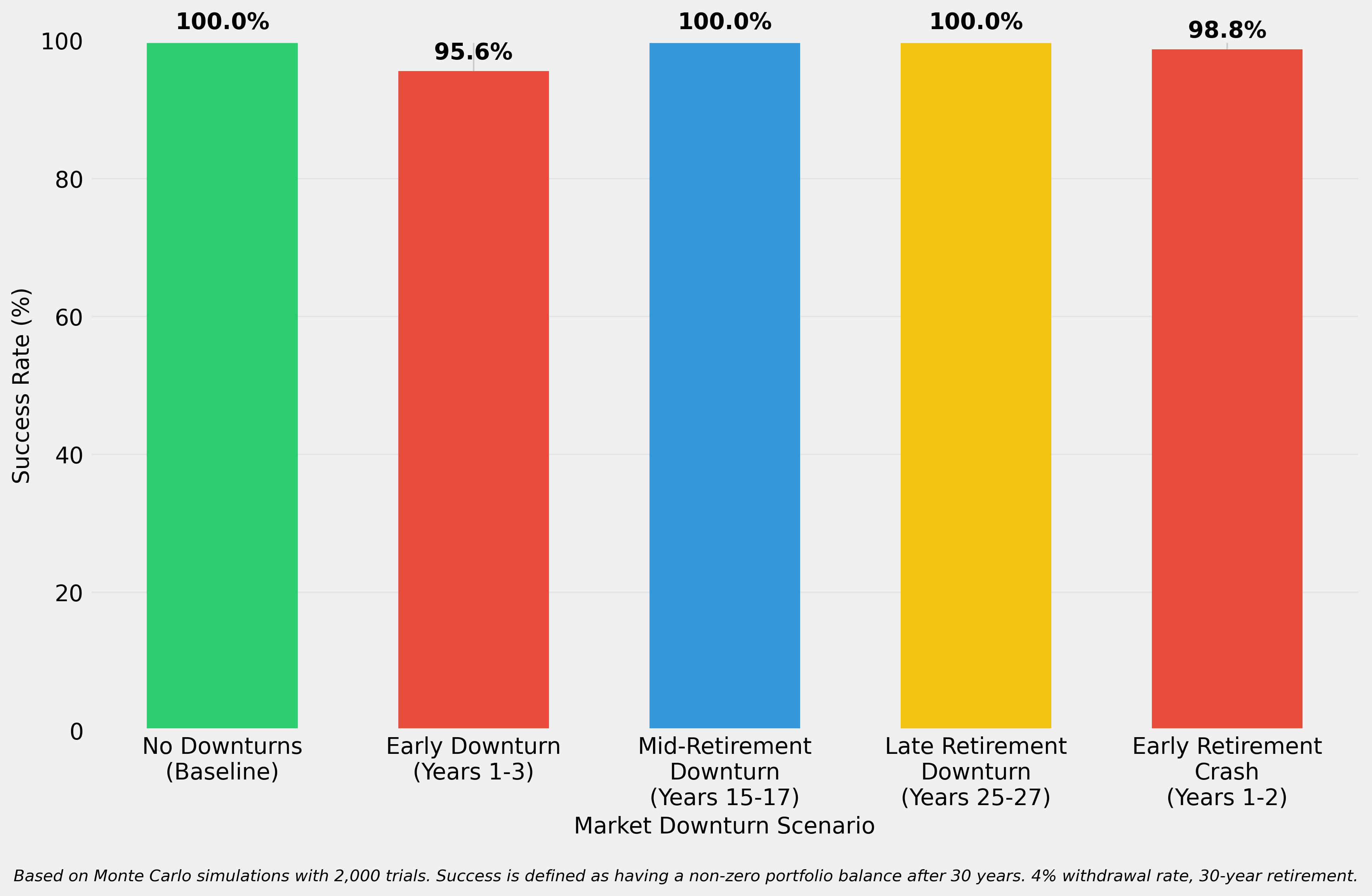
The results are striking. When bad returns (-15% annually) occur in years 1-3 of retirement, the portfolio success rate drops from 100% to 95.6%. The same sequence of bad returns occurring 15 years into retirement does not reduce the success rate of 100%.
Simulation 2: Portfolio Value Over Time
Let's visualize how portfolio values evolve under different scenarios:
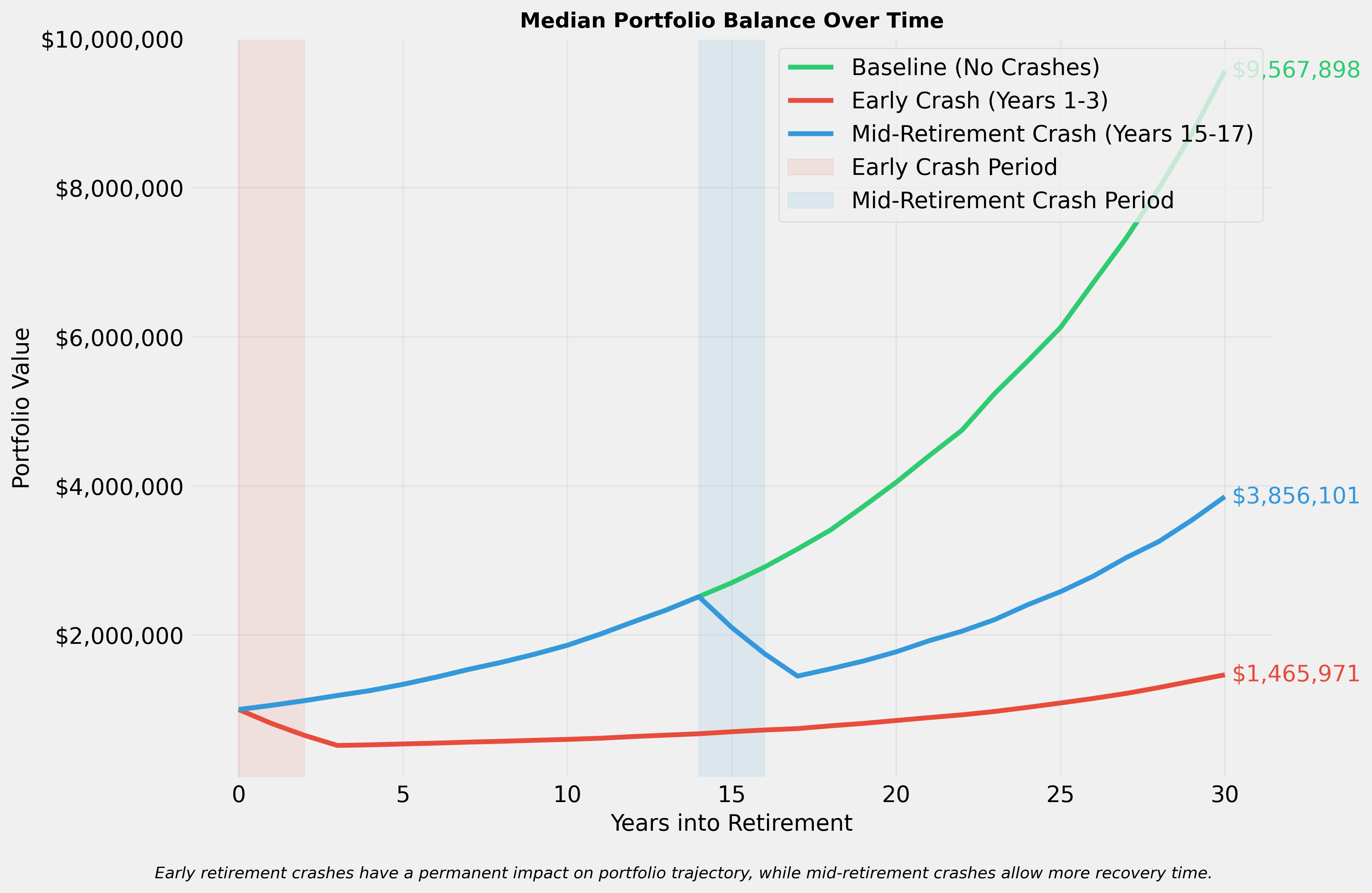
The divergence is clear. The portfolio that experiences early retirement bad years never fully recovers, despite identical long-term average returns. This happens because withdrawals during down markets force the selling of assets at depressed prices, permanently impairing the portfolio's growth potential.
Real-World Examples: Retiring at the Wrong Time
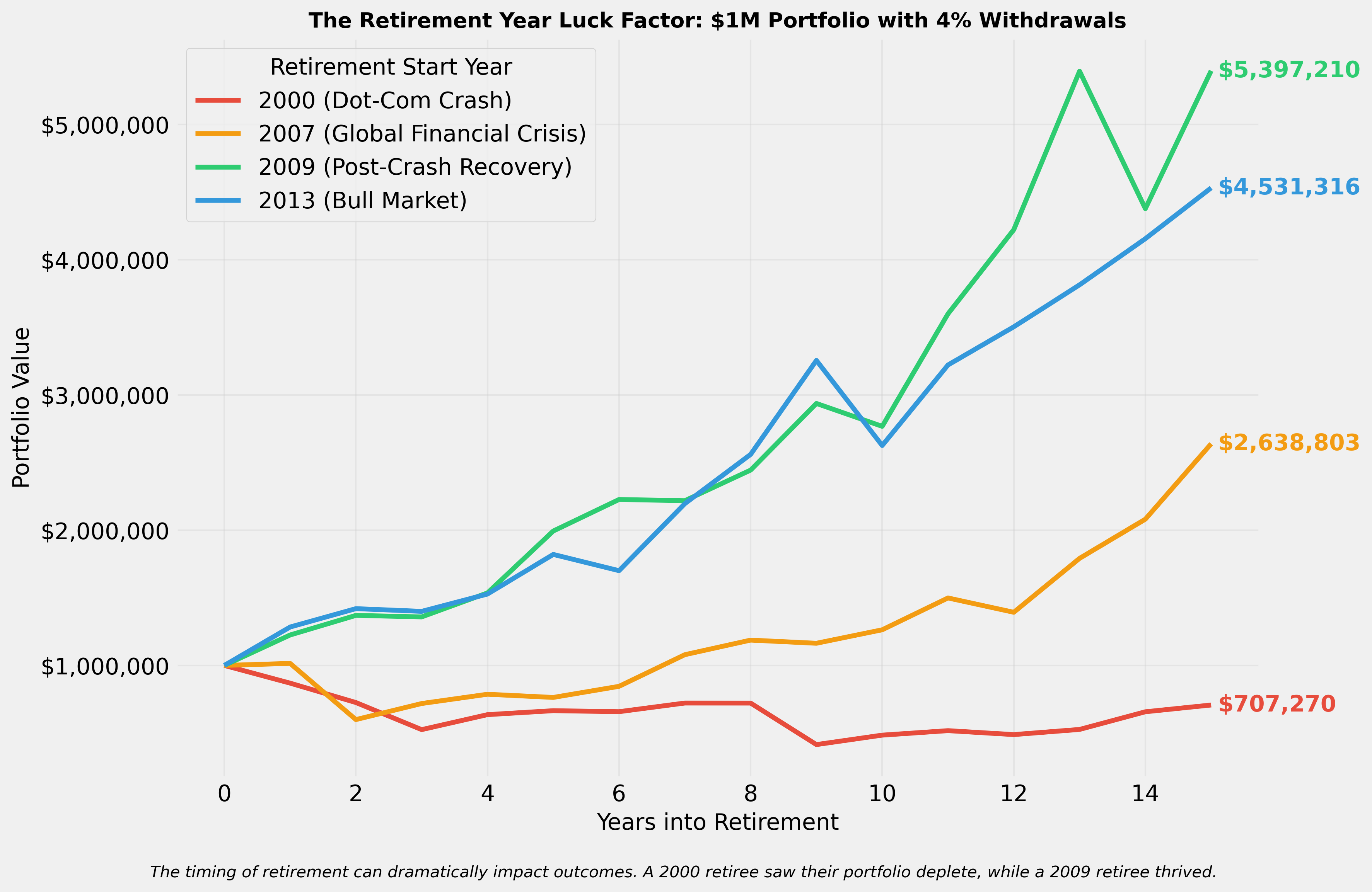
History provides sobering examples of how retiring at the "wrong time" can impact retirement plans:
Someone retiring in January 2000 (just before the dot-com crash) would have seen their $1M portfolio drop to around $500K by 2002, while still withdrawing living expenses
A 2007 retiree faced the Global Financial Crisis immediately, with markets dropping nearly 50%
Even 2021 retirees have experienced significant volatility with the 2022 market correction
In contrast, someone who retired in 2009 after the market bottomed has enjoyed one of the longest bull markets in history.
The Math Behind the Danger
To understand why early bad years are so devastating, consider this example:
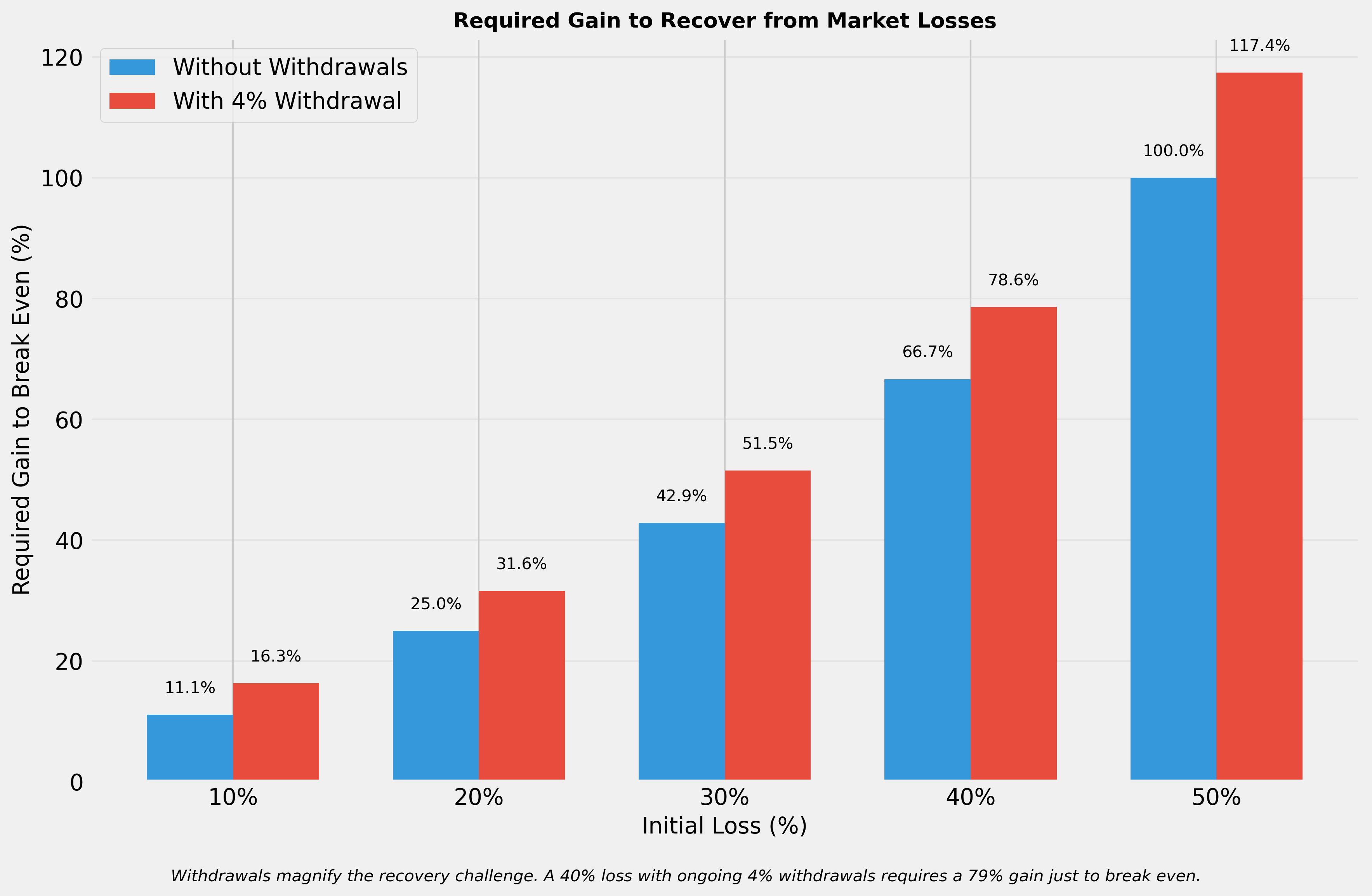
A $1,000,000 portfolio that loses 20% in year one drops to $800,000. If you're withdrawing 4% ($40,000) annually, your portfolio is now down to $760,000. It now requires a 31.6% gain just to get back to your starting point—substantially more than the 25% gain needed if you weren't making withdrawals.
Strategies to Protect Your FIRE Journey
Fortunately, several strategies can help mitigate sequence of return risk:
1. Dynamic Withdrawal Strategies
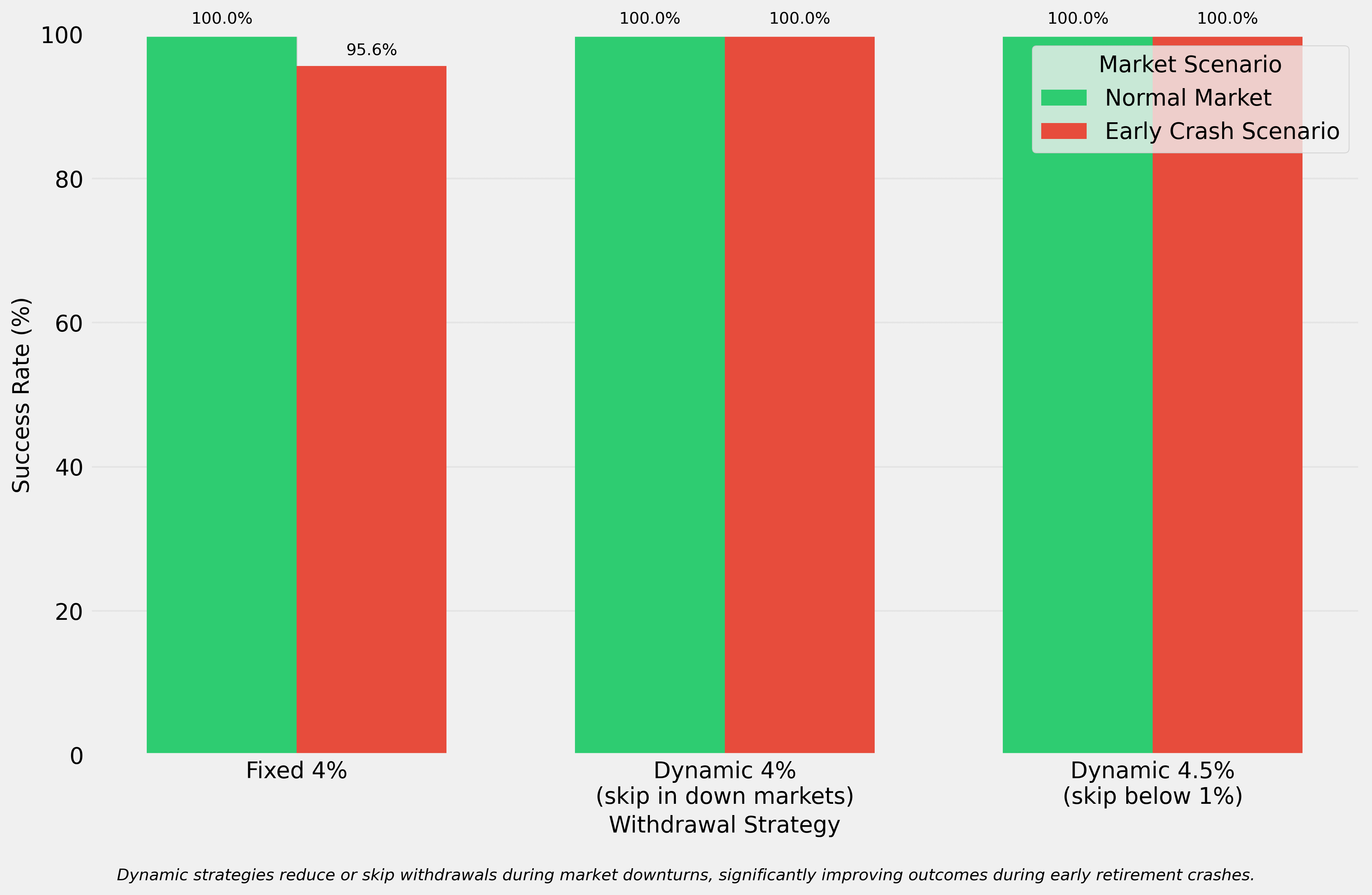
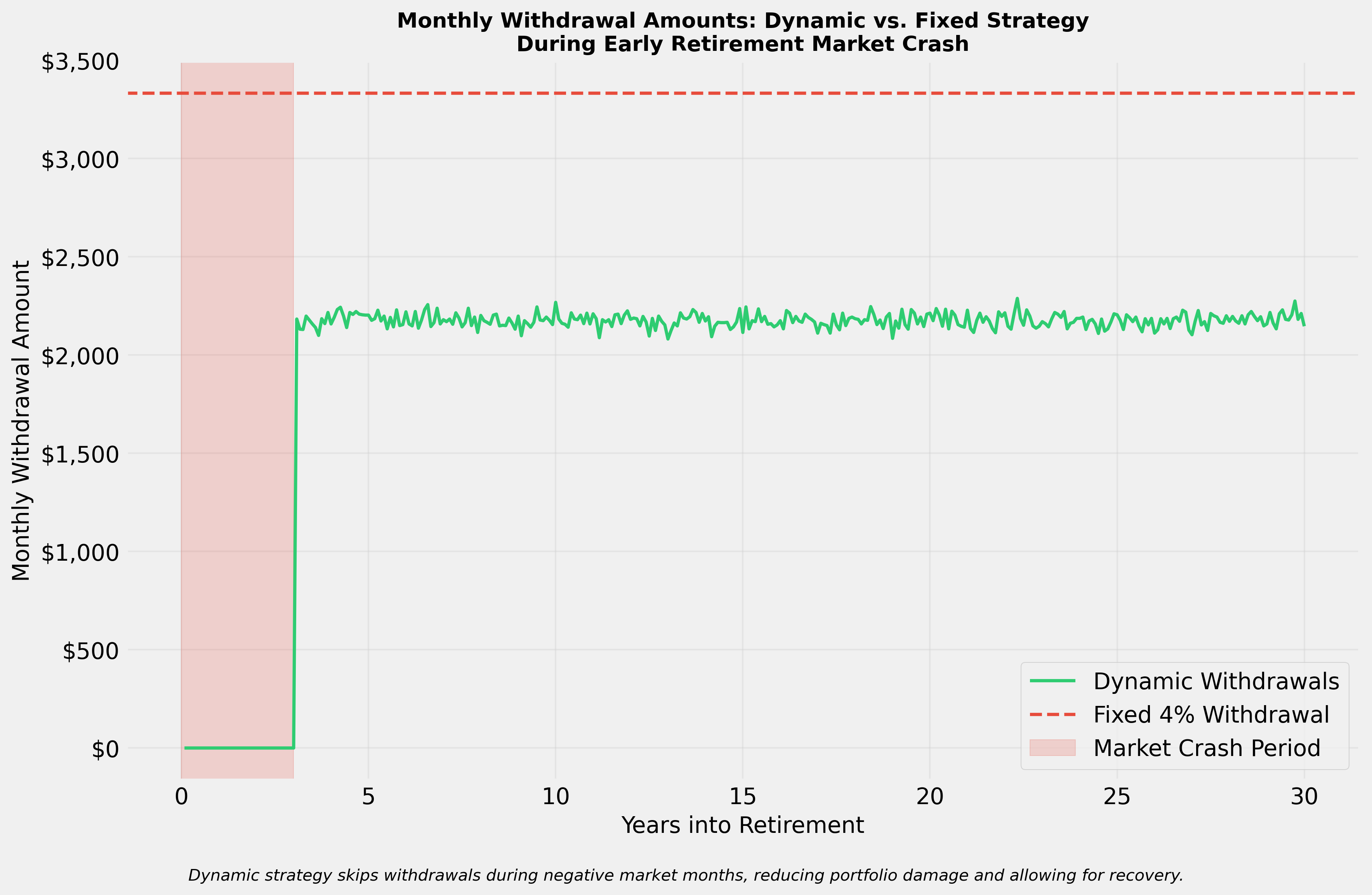
My simulations show that a dynamic withdrawal strategy—where you reduce or eliminate withdrawals during market downturns—significantly improves success rates. By skipping withdrawals when monthly returns are negative and slightly increasing withdrawals during positive months, the effective success rate improves by 5% percentage points compared to rigid withdrawal rules.
2. Larger Cash Buffer
Building a 2-3 year cash cushion allows you to avoid selling investments during market downturns. This "bucket strategy" lets you ride out bear markets without locking in losses.
3. Flexible Spending
Categorize your expenses as:
Essential (housing, food, healthcare)
Important (regular travel, hobbies)
Discretionary (luxury purchases, premium experiences)
During market downturns, cutting discretionary expenses by 10-25% can substantially improve portfolio survival rates.
4. Part-Time Income
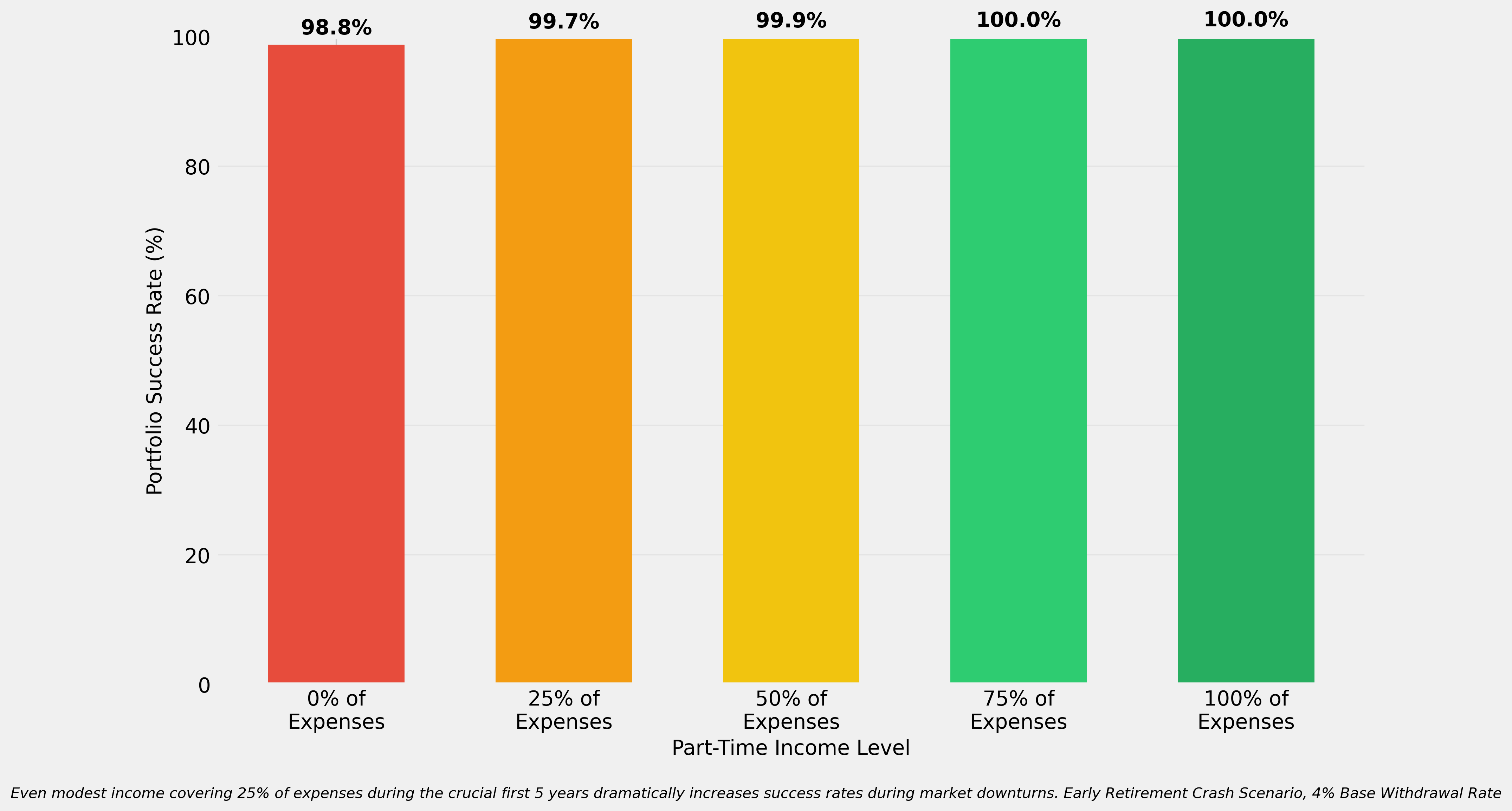
Even modest income during early retirement years provides powerful protection against sequence risk. Working part-time to cover just 25% of your expenses during the first 5 years of retirement can increase success rates by over 20 percentage points when facing early market crashes.
Putting It All Together: A Resilient FIRE Strategy
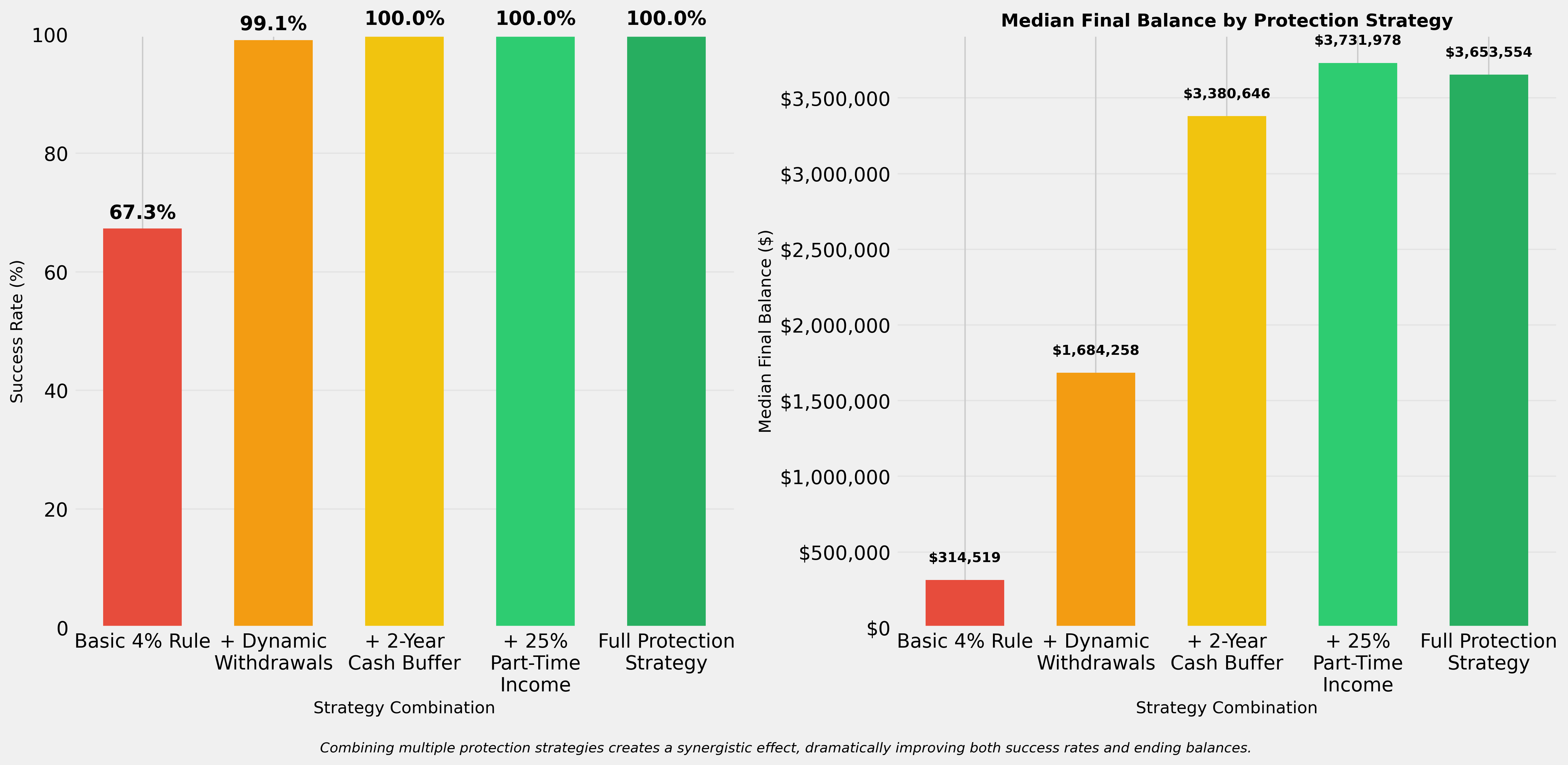
The most effective approach combines multiple strategies:
Use dynamic withdrawals (reducing withdrawals during market declines)
Maintain a 2-year cash buffer for essential expenses
Plan for flexible spending with clear categories
Consider part-time work during the first 5 years of retirement
These combined strategies can increase the probability of portfolio success from 67% to over 95% even when facing severe early retirement market crashes.
Beyond Averages: Thinking Probabilistically
Traditional FIRE calculations based on average returns and fixed withdrawal rates offer false precision. Instead, think probabilistically:
What's your portfolio's success probability under different scenarios?
How would you adapt if markets crash early in your retirement?
What's your minimum acceptable lifestyle, and how would you adjust to preserve it?
The more flexible your plan, the more resilient it becomes to sequence risk.
Conclusion: Building Antifragility into Your FIRE Plan
Nassim Taleb coined the term "antifragile" to describe things that gain from disorder. An antifragile retirement plan doesn't just survive market chaos—it has mechanisms to emerge stronger.
By incorporating the strategies outlined above, your FIRE journey can become more resilient to the unpredictable nature of market returns. The key is building flexibility into your plan from the start, staying adaptable, and understanding that the sequence of returns matters just as much as—if not more than—the average return.
Remember: It's not just how much the market returns during your retirement that matters, but when those returns occur. Prepare for the worst sequences, and you'll be positioned to thrive regardless of what the market throws your way.