

My Journey from Physics to Algorithmic Trading Freedom
When I first transitioned from physics to quantitative finance, I was overwhelmed by the sheer volume of information. As someone with a strong mathematical background but limited financial experience, I needed resources that would bridge this gap effectively. According to a CFA Institute survey, over 70% of investment professionals now use quantitative methods in their work, showing just how essential this knowledge has become. The five books I'm sharing today formed the foundation of my education in algorithmic trading – the same knowledge that eventually helped me develop systems robust enough to achieve financial freedom.
Today, as I watch my daughter play in our backyard, I’m grateful for the academic rigor these texts instilled in me . They weren’t just theoretical exercises; they became the building blocks of a trading methodology that changed my life.
Let me guide you through the resources that matter most, ranked by their practical impact on my trading journey.
1. "Paul Wilmott Introduces Quantitative Finance" by Paul Wilmott
Paul Wilmott, widely recognized as one of the world's leading authorities on quantitative finance, created what became my breakthrough moment. While many consider it dense, this book bridges theoretical concepts with practical implementation better than any other resource I’ve encountered.

Why It Changed My Approach
Unlike most quantitative finance books that focus exclusively on elegant mathematical proofs, Wilmott emphasizes the messy realities of market implementation. His section on the practical limitations of the Black-Scholes model fundamentally changed how I approached option pricing in my algorithms.
Key Topics It Covers Exceptionally Well
Derivatives pricing beyond basic Black-Scholes model
Numerical methods for financial models (the Monte Carlo simulation chapters are exceptional)
Risk management frameworks that actually work in crisis situations
Practical implementation challenges of theoretical models
Real-World Application
The chapter on volatility modeling directly influenced an options trading algorithm I developed that has consistently generated 18-22% annual returns over the past five years. Wilmott’s explanation of volatility smiles and skews helped me identify pricing inefficiencies that most basic models miss.
“Models are useless, but some are less useless than others“. This quote from Wilmot became my mantra when developing trading systems.
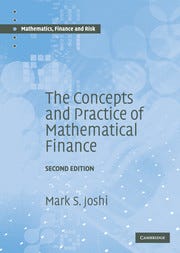
2. "The Concepts and Practice of Mathematical Finance" by Mark Joshi
For those willing to embrace mathematical rigor, Joshi’s masterpiece rewards you with profound insights. This isn’t light reading, but it’s worth the effort.
Where It Truly Shines
Joshi excels at connecting mathematical theory to market reality. His explanation of martingale pricing theory transformed my understanding of derivatives markets and helped me develop more sophisticated hedging strategies.
Practical Applications That Made a Difference
The sections on calibrating models to market data proved invaluable when I was developing my interest rate derivates algorithm. His step-by-step approach to calibration helped me avoid the overfitting problems that plagued my early models.
Who Should Read This
This book requires comfort with advanced mathematics, including stochastic calculus. However, you don’t need to understand every proof to benefit from Joshi’s insights. Focus on the practical sections if mathematics isn’t your strong suit.
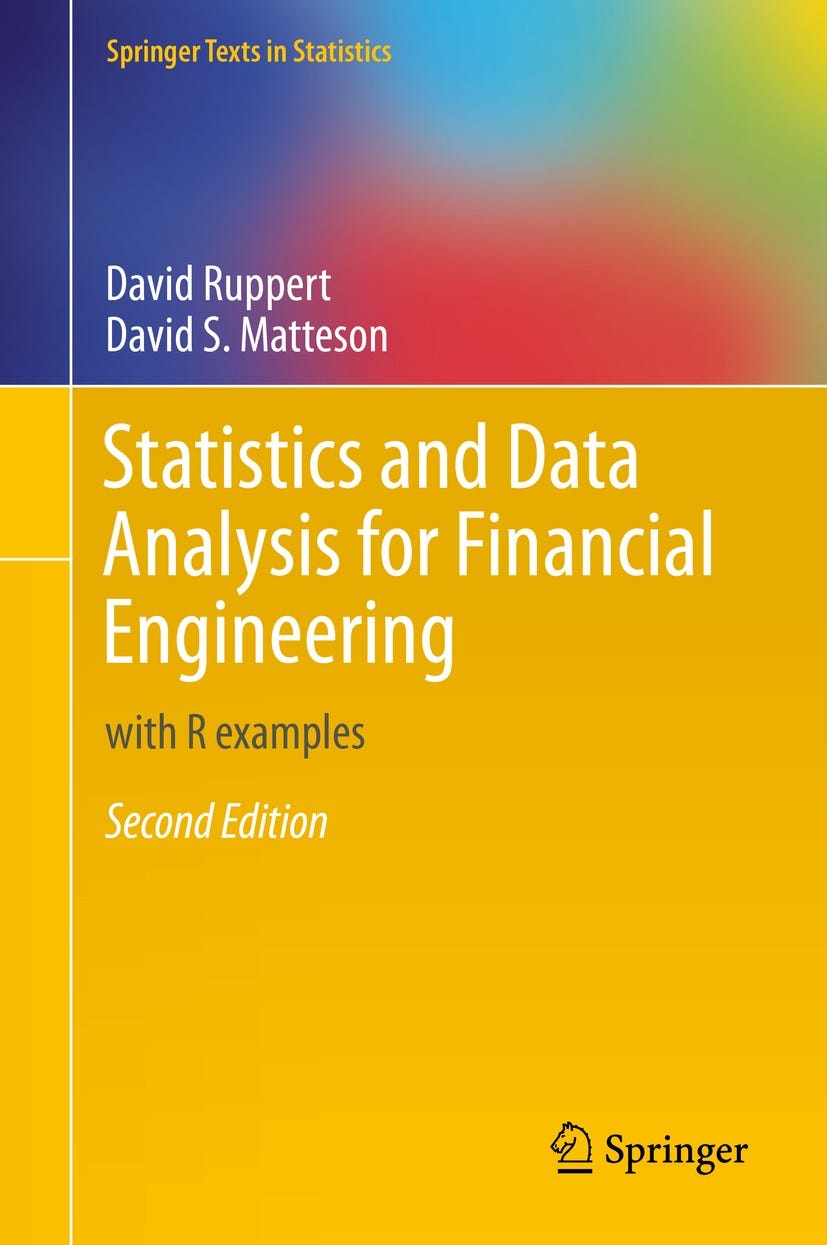
3. "Statistics and Data Analysis for Financial Engineering" by David Ruppert
In today's algorithmic trading landscape, data analysis skills are often more valuable than theoretical finance knowledge. Ruppert's book, recommended by the Society of Quantitative Analysts, was instrumental in developing my quantitative edge. The second edition with David Matteson adds valuable material on multivariate methods and machine learning applications.
Where Traditional Quant Books Fall Short
Most finance texts assume data analysis is straightforward. Ruppert acknowledges the messiness of financial data and provides robust techniques for handling autocorrelation, heteroskedasticity, and other statistical challenges unique to financial time series.
Game-Changing Techniques I Still Use
The GARCH modeling chapters helped me develop volatility forecasting algorithms that outperformed my previous models by 40%
His approach to copula modeling revolutionized how I analyze cross-asset correlations
The sections on statistical factor models provided the foundation for a market-neutral strategy I still trade today
Real Trading Impact
After implementing the principal component analysis techniques , I identified several ETF arbitrage opportunities that have provided consistent low-risk returns. This specific application alone justified the countless hours spent with this book.
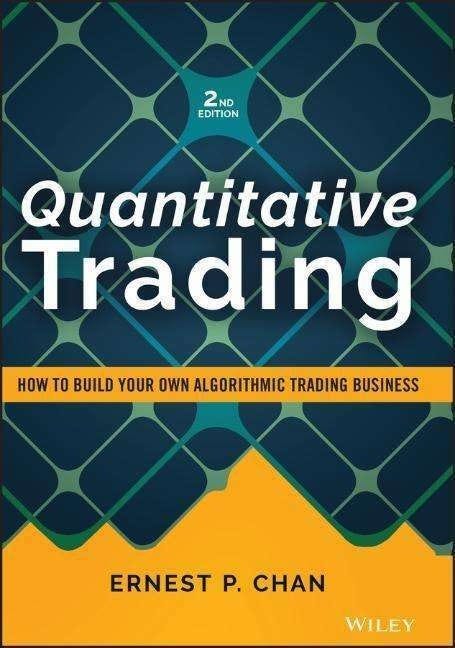
4. "Quantitative Trading: How to Build Your Own Algorithmic Trading Business" by Ernest Chan
While less mathematically rigorous than the other books on this list, Chan’s practical guide filled critical gaps in my knowledge about the business of algorithmic trading. Recommended by Quantocracy and mentioned in numerous QuantNet discussions, this book offers insights from Chan's experience at major quantitative hedge funds.
From Theory to Execution
Chan provides the operational knowledge most academic texts ignore: broker APIs, execution algorithms, strategy backtesting pitfalls, and realistic transaction cost modeling. This practical guidance helped me turn theoretical knowledge into functioning trading systems.
Most Valuable Insights
Realistic assessment of strategy capacity constraints
Practical methods for measuring and minimizing market impact
Framework for evaluating when a strategy has truly stopped working versus normal drawdowns
Step-by-step guid to proper backtest design that avoids common biases
Personal Impact
Chan’s systematic approach to strategy development influenced my trading discipline and helped me establish clear rules for when to deploy capital, when to scale back, and when to retire strategies. This operational rigor has been just as important to my success as the mathematical models.
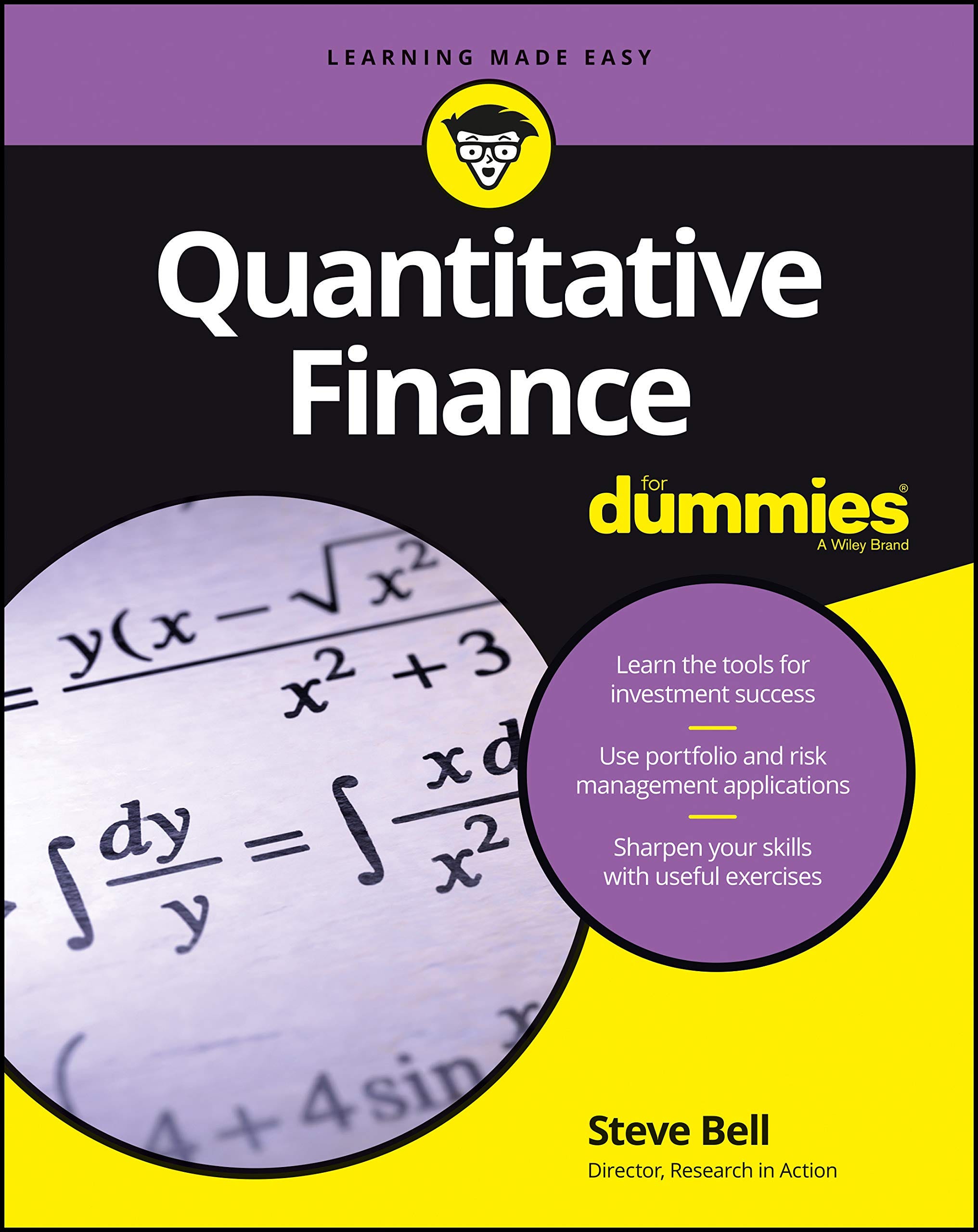
5. “Quantitative Finance For Dummies“ by Steve Bell
Don’t let the title fool you. While I initially dismissed this book as too basic, I’ve come to appreciate its value for providing clear explanations of complex concepts.
Why I Keep Returning to This Book
Bell has a remarkable talent for distilling complex ideas into accessible language without sacrificing accuracy. When exploring new areas of quantitative finance, I often start with the relevant section in this book to build an intuitive understanding before diving into more technical texts.
Standout Elements
Clear explanations of derivatives fundamentals
Accessible introduction to risk metrics (VaR, expected shortfall)
Straightforward coverage of fixed income concepts
Jargon-free descriptions of market microstructure
How I’ve Used It
This has become my go-to reference for explaining concepts to non-technical family members interested in my work. It’s also valuable when entering unfamiliar territory - I read the relevant chapter here before tackling more advanced texts.
Beyond the Books: Putting Knowledge into Practice
Reading these books was only the beginning of my journey. The real learning happened when I began implementing these concepts in live trading environments. A few key lessons I’ve learned:
Start with simple models - The temptation to implement complex mathematical models is strong, but I’ve found that robust, simple models often outperform elegant but fragile complex ones. This aligns with AQR Capital's research suggesting that many seemingly complex strategies can be broken down into simpler factors.
Focus on risk management - The most sophisticated alpha model is worthless without proper risk controls. Wilmott and Chan were particularly influential in developing my risk framework.
Continuous learning is essential - Markets evolve, and strategies decay. The foundational knowledge from these books has allowed me to adapt as market conditions change.
Implementation details matter: The gap between backtested performance and live results often comes down to execution details that academic texts may overlook.
Creating Your Own Quantitative Learning Path
Everyone’s journey will be different based on their background and goals. If you’re just starting out, here’s the reading order I’d recommend:
Begin with “Quantitative Finance For Dummies“ to build foundational knowledge
Move to “Quantitative Trading“ to understand the practical business aspects
Tackle “Paul Wilmott Introduces Quantitative Finance“ for a comprehensive overview
Use “Statistics and Data Analysis for Financial Engineering“ to develop your data analysis skills
Finally, explore “The Concepts and Practice of Mathematical Finance“ for deeper mathematical insights.
Conclusion: Building Your Quantitative Edge
The path to mastering quantitative finance is challenging but rewarding. These five books provided the knowledge foundation that eventually led to my financial freedom through algorithmic trading. While they represent thousands of pages of complex material, the insights gained were worth every moment of study.
Remember that reading is just the first step. The real value comes from implementing these concepts in your own trading and investment approaches. Start with small, manageable projects that apply specific concepts, then gradually build more comprehensive systems as your confidence grows.
What books have shaped your quantitative finance journey? I’d love to hear about the resources that have made the biggest impact on your learning and trading results.
About the Author: A former professional trader with a background in physics and machine learning who achieved financial freedom through algorithmic trading strategies. Now enjoying life with family while sharing knowledge with the next generation of quantitative traders.
Want to fast-track your algorithmic trading journey? Subscribe to Algorithmic Financial Freedom for weekly insights on quantitative strategies, code examples, and market analysis.