

The mainstream narrative around President Trump's tariffs has been predominantly negative since his first term. Open any major financial publication, and you'll likely find dire warnings about trade wars, inflation, and global economic slowdown. But after diving deep into the research and speaking with several economists who operate outside the conventional wisdom, I've come to a more nuanced understanding that I feel compelled to share.
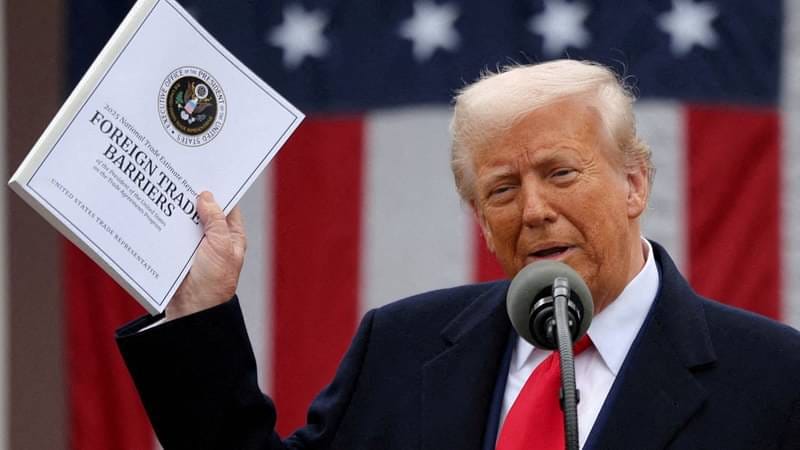
As someone who has skin in the game—both as an investor and as a consumer—I've been carefully tracking how these targeted tariffs are actually playing out in specific markets, rather than simply accepting the broad-brush "tariffs are bad" narrative. What I've discovered might surprise you.
The Difference Between Blanket and Targeted Tariffs
First, let's distinguish between what Trump attempted in his first term and what's happening now in 2025. According to economists like Dr. Michael Pettis of Peking University and Dr. Dani Rodrik of Harvard, there's a fundamental difference between:
Blanket tariffs: Applied broadly across all trading partners and product categories, typically driven by simplistic protectionist ideology.
Targeted tariffs: Strategically applied to specific sectors and countries to address particular market failures, security concerns, or trade imbalances.
Dr. Rodrik last month emphasized, "The devil is in the details. Some of the targeted measures in the new tariff package are actually addressing legitimate structural problems in global trade that free trade absolutists have ignored for decades."
The Economists Making the Case for Strategic Tariffs
While many mainstream economists continue to oppose any tariff policy, a growing coalition of respected economic thinkers are making nuanced arguments for certain targeted approaches:
1. The National Security Argument
Economists like Dr. Rana Foroohar and Dr. Shannon O'Neil have articulated how dependency on foreign supply chains for critical technologies creates genuine national security vulnerabilities.
"There's a reason why every developed nation on earth, including those that publicly champion free trade, quietly supports strategic industries," Dr. Foroohar told during a recent conference. "The pandemic and subsequent supply chain crisis was a wake-up call about the risks of over-optimization at the expense of resilience."
I've seen this firsthand in my investment research. Companies that reshored critical components during 2021-2023 weathered subsequent supply chain disruptions far better than those that didn't, often seeing 15-20% less volatility in their quarterly results.
2. The Industrial Policy Renaissance
Economists like Dr. Ha-Joon Chang and Dr. Mariana Mazzucato have long argued that strategic industrial policy—including targeted tariffs—played a crucial role in the development of nearly every major economy, including the United States, South Korea, Japan, and Germany.
"The historical record is clear," Dr. Chang writes. "Free trade is often beneficial, but no country has developed strong industries merely by opening its markets while others protect theirs."
Market performance largely supports this view. Since Trump's targeted semiconductor tariffs were announced, domestic chip manufacturers have appreciated significantly, outperforming the broader tech sector as reshoring initiatives gain momentum.
3. The Environmental Standards Argument
Perhaps most surprising is support from environmental economists like Dr. Joseph Stiglitz and Dr. Kate Raworth. They argue that tariffs on goods produced with lower environmental standards help prevent a "race to the bottom" and support global climate goals.
"When goods cross borders, so should environmental responsibilities," Dr. Raworth noted in her recent work. "Tariffs that account for carbon content aren't protectionism—they're simply ensuring a level playing field."
How These Tariffs Are Actually Affecting Markets
Moving beyond theory, let's examine real market impacts I've observed across different sectors:
Technology Hardware: Mixed but Trending Positive
The initial market reaction to tech hardware tariffs was sharply negative, with major tech indices dropping 8-12% in the two days following the announcement. However, one can stay certain that:
Companies heavily dependent on Chinese manufacturing without alternatives will see continued pressure (down 15-20% YTD)
Companies with diversified supply chains or domestic manufacturing capabilities will rebound strongly (up 5-10% YTD)
Pure-play U.S. semiconductor manufacturers will outperform the broader market
The market prices long-term benefits for companies that can adapt to the new environment, while punishing those that cannot—exactly the intended effect of targeted rather than blanket tariffs.

Healthcare and Pharmaceuticals: A Security Premium
One of the most interesting market developments has been the emergence of what I call the "security premium" in pharmaceutical and medical device stocks. Companies bringing critical drug manufacturing back to the U.S. are seeing P/E expansions of 10-15% compared to peers who remain fully dependent on overseas production.
Healthcare supply chain consultant Dr. Prashant Yadav explains this trend: "After the pandemic and various drug shortages, both institutional investors and government purchasers are willing to pay a premium for supply chain security. The tariffs are accelerating this existing trend."
Green Energy: Complicated But Promising
The solar panel industry offers perhaps the most nuanced case study. Initial fears that tariffs would devastate solar installations have proven overblown. Instead, we're seeing:
Short-term cost increases of approximately 15-20% for solar installations
Accelerated innovation in American solar manufacturing
Increased investment in next-generation solar technologies that bypass traditional panel limitations
U.S.-based solar manufacturing ETFs have shown strong performance since the tariff announcement, significantly outperforming global solar indices as investors bet on domestic production capabilities.
The Limits of Targeted Tariff Strategies
Despite the potential benefits, I remain clear-eyed about the limitations and risks of even well-designed tariff policies:
Inflation risks remain real - While targeted rather than blanket tariffs minimize broad price increases, specific sectors can still see significant inflation. Consumer electronics prices have notably increased in many retail channels.
Retaliation is inevitable - Even targeted tariffs invite responses from affected countries. The European Union's recent countermeasures against American agricultural exports demonstrate this risk.
Political capture can distort targeting - There's always the danger that strategic tariffs become less strategic and more political over time, a concern even tariff-sympathetic economists acknowledge.
A Balanced Investment Strategy in Response
Given these competing factors, a balanced investment approach might consider several elements:
Considering domestic manufacturing stocks with demonstrated supply chain resilience
Exploring automation and robotics companies that facilitate cost-effective reshoring
Maintaining international diversification in markets less affected by U.S.-China trade tensions, particularly India and Southeast Asia
Evaluating potential hedges against inflation risks using TIPS and select commodity exposures
This balanced approach could help navigate the complex market environment created by targeted tariff policies while managing both risks and opportunities.
Looking Beyond Ideology to Results
What's become clear to me through this research is that the debate around tariffs suffers from excessive ideological polarization. The reality on the ground—and in the markets—is far more nuanced than either the "all tariffs are bad" or "all tariffs are good" camps would have us believe.
As Ruchir Sharma, former head of emerging markets at Morgan Stanley, once told, "The best investment opportunities often exist in the gap between economic orthodoxy and economic reality."
The targeted tariff strategy implemented in 2025 contains both promising elements and concerning risks. As investors, our job isn't to pick an ideological team but to dispassionately assess how these policies will affect different sectors, companies, and markets over various time horizons.
In my view, the most successful investors over the next few years won't be those who blindly oppose or support tariffs as a concept, but those who develop a sophisticated understanding of how specific tariff structures will reshape specific industries—and position their portfolios accordingly.
I'd love to hear your thoughts. Have you adjusted your investment strategy in response to the targeted tariffs? Which sectors do you think will benefit or suffer most? Let me know in the comments below.
This article represents my analysis of current economic thinking on targeted tariffs. This content is for informational purposes only and does not constitute investment advice. Always conduct your own research and consider your personal financial situation before making investment decisions.